
THE GUIDE · NO. 17
Bones Are the New Glutes.
Everything nobody told you about bone health after menopause
BY deia2 MIN READ
Everybody talks about glutes. Nobody talks about bones. Until they have to.
Why it matters now
Estrogen helps protect bone. After menopause, as estrogen falls, bone density drops faster, which raises the risk of osteoporosis and fractures later on.
What helps
- Lift and load. Strength training and weight-bearing exercise like brisk walking help support your bones. See The Guide No. 05.
- Get enough calcium. The US National Institutes of Health recommends 1,200 mg a day for women over 50, ideally mostly from food.
- Get enough vitamin D. It helps your body use calcium. The NIH recommends 600 IU a day up to age 70 and 800 IU after. Ask your doctor whether you should have your level checked.
- Don't smoke, and keep alcohol low. Both are hard on bones.
- Work on balance. Fewer falls means fewer fractures. Yoga, tai chi and single-leg stands all help.
- Ask about a bone density scan. Screening is recommended for women 65 and older, and earlier for women with risk factors. Ask your doctor what makes sense for you.
Where Backbone fits
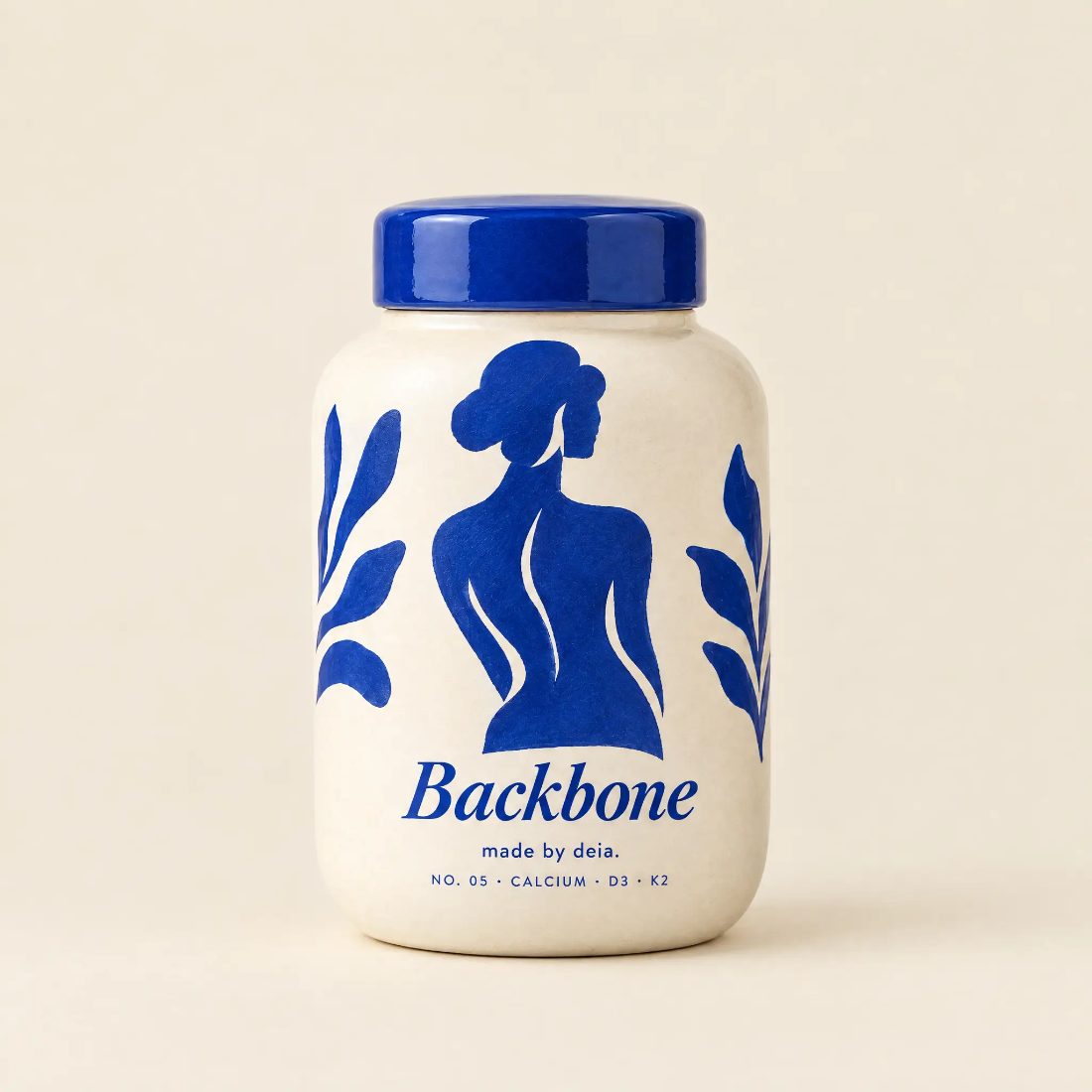
Backbone is our calcium supplement with vitamin D3 and K2. If you're not getting enough from food, ask your doctor whether a supplement is right for you.
Strong bones, strong goddess, deia
This article is for general information only and isn't medical advice. Please talk to your doctor about your own health.
Always check with your doctor or pharmacist before starting a new supplement, especially if you take medication.